What is a Digital Substation?
A Digital Substation is a substation where the exchange of signals and measurements accross and among primary and secondary equipment (i.e. current or voltage transformers and protection devices) happens via high-speed protocol communication instead of static copper wiring.
This shift is enabled by IEC 61850, an international standard that defines how intelligent electronic devices (IEDs) communicate using a common language, making the IEC 61850 Digital Substation architecture possible. COPA-DATA's zenon Software Platform provides the HMI, SCADA, and gateway functions to monitor and control Digital Substations through native IEC 61850 integration.
Key takeaways: Wat is a Digital Substation?
-
A Digital Substation replaces copper signal wiring with protocol-based communication, mostly fiber-optic based, reducing the physical footprint, installation labor, and material costs of substation construction and maintenance.
-
The so called Process Bus is the defining change. Instead of running dedicated copper cables from every piece of switchyard equipment to the associated bay level equipment (i.e. central control cubicals or distributed relay panels), digitized measurements and signals are published onto a shared network that any device can access.
-
IEC 61850 provides the common language. Standardized protocols and a unified data model allow devices from different manufacturers to work together without protocol converters or custom engineering.
-
Digital Substations enable capabilities that hardwired substations cannot, including centralized protection, in-system testing without physical intervention, and faster device replacement during faults.
-
zenon supports Digital Substations through native IEC 61850 communication, providing the operator interface, data gateway, and engineering tools on a single platform.
How is a Digital Substation different from a conventional substation?
In a Digital Substation vs conventional substation comparison, the key difference lies in how signals are transmitted: analog copper cables with point-to-point wiring give way to digitized, networked communication over fiber optics.
A conventional substation relies on copper cables to carry every signal between its components. Each signal requires a dedicated cable, resulting in thousands of connections, cable trenches, and marshalling cabinets. Installation is labor-intensive, and finding a wiring fault means physically tracing cables across the site.
A Digital Substation replaces this hardwired approach with Ethernet-based communication over fiber-optic cables. The key differences:
| Feature | Conventional substation | Digital Substation |
| Signal transmission | Analog signals over copper wires, one signal per wire | Digitized signals over fiber-optic Ethernet, all signals share the same network |
| Equipment connectivity | Point-to-point: each device is hard-wired to specific equipment | Networked: devices subscribe to the data they need from a shared network |
| Data standard | Proprietary protocols, vendor-specific wiring schemes | IEC 61850 common data model, all devices speak the same language |
| Physical footprint | Large cable trenches, marshalling kiosks, termination cabinets | Reduced cabling, smaller control house requirements |
| Flexibility | Adding a device requires new cabling and potential outage windows | New devices connect to the network and access available data streams |
| Testing and maintenance | Physical intervention required to isolate and test circuits | In-system testing via software, reducing outage time |
What components make up a Digital Substation?
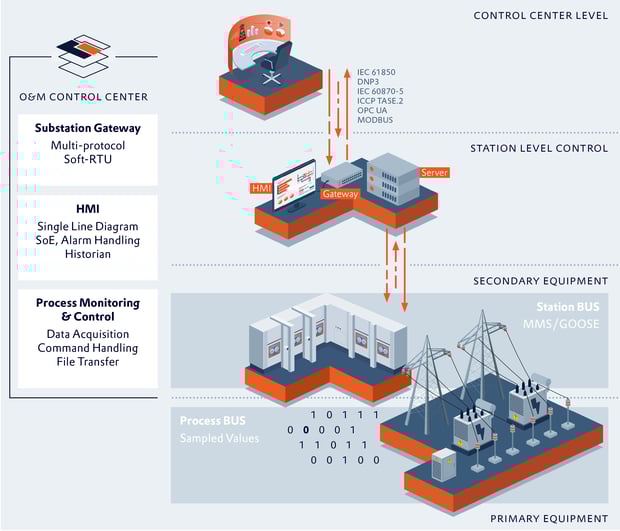
A Digital Substation can be understood in two main parts: what happens in the switchyard, and what happens in the control room. IEC 61850 is the bridge between them.
In the switchyard: digitizing signals at the source
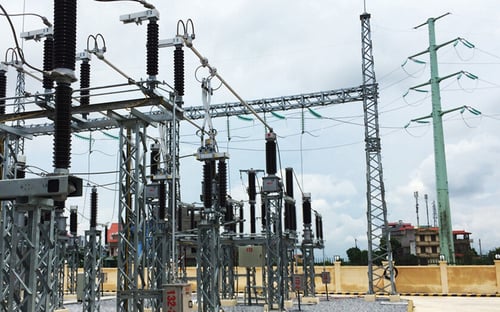
In a conventional substation, instrument transformers in the switchyard measure current and voltage, then send those measurements as analog signals over copper cables to relays in the control room . Each measurement needs its own cable.
In a Digital Substation, devices called merging units sit near the primary equipment and convert analog measurements into digital data right at the source. This digitized data is published onto a fiber-optic network called the Digital Substation process bus. Instead of running hundreds of copper cables from the switchyard to the control room , a single fiber-optic connection carries all the data.
This is the most significant change from conventional substation design. It means:
-
Less copper to purchase, install, and maintain
-
Fewer cable trenches and termination cabinets
-
Data that is available to every device on the network, not just the one it's wired to
- Fiber-optic isolation that eliminates electrical interference and ground potential rise issue
In the control room : protection, control, and visualization
The control room houses the intelligent electronic devices (IEDs) that protect and control the substation, along with the HMI and SCADA systems that operators use to monitor and manage operations.
IEDs are microprocessor-based controllers that perform the core functions of the substation: detecting faults, issuing trip commands to circuit breakers, monitoring voltage and current, and recording disturbance data during grid events. In a Digital Substation, IEDs communicate over Ethernet using IEC 61850 rather than individual copper wiring, subscribing to the digitized data they need from the process bus.
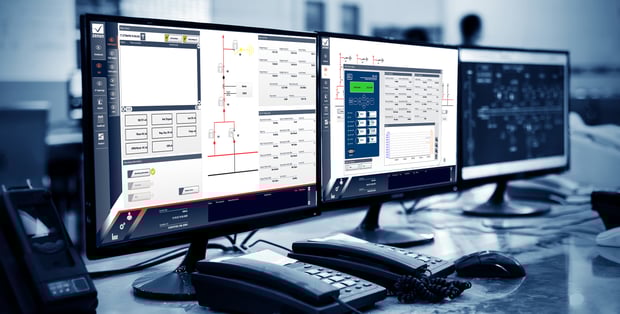
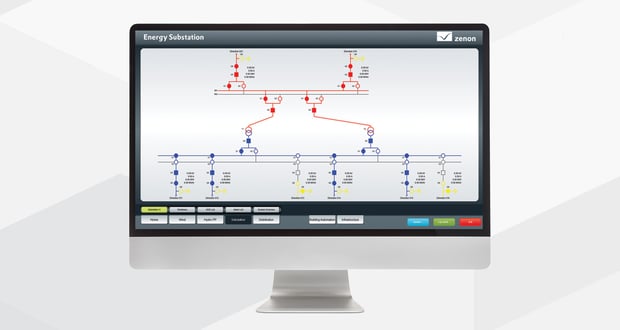
The HMI and SCADA layer, where zenon operates, provides the operator interface. This includes single-line diagrams showing the real-time state of the substation, alarm management for detecting and responding to issues, event logging for post-incident analysis, and gateway functions for forwarding data to regional and national control centers.
What role do IEDs play in a Digital Substation?
Intelligent Electronic Devices (IEDs) are the controllers that protect, monitor, and manage substation equipment. In a Digital Substation, IEDs communicate over Ethernet using IEC 61850 rather than through individual copper signal wires.
The four main functions IEDs perform:
-
Protection: detecting faults such as overcurrent or short circuits and issuing trip commands to circuit breakers, eventually informing adjacent protection devices
-
Control: executing open and close commands for breakers and disconnectors, managing automatic switching sequences
-
Monitoring: capturing voltage, current, power, and frequency measurements for the SCADA system
- Disturbance recording: storing high-resolution waveform data during grid events for post-fault investigation
Because IEDs conform to IEC 61850, they share a common data model, which lets zenon display data from any compliant IED without custom drivers.
What is the Process Bus and why does it matter?
The process bus is the Ethernet network that connects the switchyard to the control room in a Digital Substation. It carries digitized measurement data and protection signals, replacing the copper wiring that conventionally links primary equipment to protection and control devices.
Two types of data travel on the process bus:
-
Measurements value streams: digitized current and voltage values from instrument transformers, published continuously so any device on the network can access them
- Discrete protection signals : high-speed messages between protection relays for functions like tripping, interlocking, and breaker failure detection
What the process bus changes in practice
-
Fewer cables, less infrastructure. A single fiber-optic connection between the switchyard and the control room replaces hundreds of copper cables, reducing material costs, simplifying installation, and shrinking the substation footprint. Fiber is also immune to electrical interference, improving measurement accuracy and safety.
-
Data is shared, not point-to-point. In a conventional substation, a current transformer measurement is wired to a single relay. On a process bus, the measurement is digitized once and published to the network, so every device that needs it subscribes to the same data stream.
-
Protection schemes become software-configurable. Protection functions that previously required dedicated wiring between relays can be implemented through network messaging, reducing the time and cost of modifications during the substation's operational life.
-
Testing requires less downtime. In a Digital Substation, individual devices can be isolated and tested using software-based test modes, reducing outage windows for routine maintenance and commissioning.
- Centralized protection becomes possible. When all substation data is available on a shared network, protection functions can be consolidated into centralized controllers rather than distributed across individual bay-level relays. This is the foundation of centralized protection and control (CPC) architectures, which zenon supports by providing the HMI and SCADA layer and by monitoring protection signals to ensure scheme continuity during device maintenance.
What should you consider when implementing a Digital Substation?
Understanding IEC 61850
The first step toward a Digital Substation is understanding how IEC 61850 structures substation automation. The standard defines the communication protocols devices use, the data model that ensures all devices represent information the same way, and an engineering process based on standardized configuration files. This common framework is what makes multi-vendor interoperability practical.
Multi-vendor interoperability
Because IEC 61850 standardizes both the data model and the communication services, devices from different manufacturers can work together within the same substation. A utility is not locked into a single equipment supplier for the lifetime of the asset. New devices can be procured based on performance and cost rather than compatibility with existing proprietary systems.
Cybersecurity
Moving substation communication from dedicated copper wiring to a shared Ethernet network introduces cybersecurity considerations that did not exist in hardwired systems. The IEC 62351 standard defines security measures for power system communications, including encryption and authentication. A Digital Substation automation platform should implement these as native features. zenon includes encryption and authentication across all IEC 61850 services and is developed under an IEC 62443-4-1 certified secure development lifecycle.
How does zenon support Digital Substation implementation?
| Function | zenon capability |
| HMI and SCADA | Real-time visualization with single-line diagrams, alarm management, event logging, and role-based operator control. Connects to any IEC 61850-compliant IED. |
| GOOSE integration | Monitors protection signals between devices for visibility into protection system health. Can substitute missing signals during device maintenance or failure. |
| Substation gateway | Forwards data to regional and national control centers using standard protocols, mediating between substation-level and control-center-level communication. |
| Disturbance record management | Collects fault records from IEDs across the substation and provides an integrated viewer for post-incident analysis. |
| Commissioning and maintenance support | Simulates devices for pre-commissioning testing, monitors communication status during trial operation, and enables fast device replacement when equipment fails. |
For a deeper look at how utilities transition to these technologies, see our blog article on making the switch from traditional to Digital Substations.
FAQs about Digital Substations
-
A Digital Substation is a substation where data exchange between primary equipment, protection devices, and control systems occurs over Ethernet-based communication networks using the IEC 61850 standard instead of traditional copper signal wiring.
-
Digital Substations offer reduced physical footprint, lower installation and maintenance costs, greater flexibility for future upgrades, and enhanced protection through software-configurable schemes. They also enable centralized protection and control, which can improve flexibility, reduce investment costs and simplify operations.
-
A hybrid Digital Substation combines elements of both conventional and fully digital architectures, often during a phased modernization. For example, a utility might introduce a process bus for new bays while retaining hardwired connections in existing ones, managed through a single automation platform.
-
IEC 61850 is the international standard governing Digital Substation communication. It defines the data model, communication protocols, and engineering process that enable interoperability between devices from different manufacturers.
-
The key difference is how signals are transmitted. A conventional substation uses dedicated copper cables for each signal between equipment. A Digital Substation digitizes signals at the source and shares them over a common Ethernet network using IEC 61850 protocols. This reduces cabling, simplifies infrastructure, and makes data available to multiple devices simultaneously.
-
The process bus is the Ethernet network connecting the switchyard to the control room. It carries digitized current and voltage measurements and protection signals, replacing the copper wiring that conventionally connects primary equipment to protection and control devices.
-
Yes. Existing substations can be upgraded incrementally by introducing merging units, process bus segments, and IEC 61850-compliant IEDs alongside legacy equipment. A unified SCADA/HMI platform can manage both conventional and digital bays during the transition, avoiding the need for a full replacement.
-
Yes. zenon integrates natively with IEC 61850, providing the HMI and SCADA functions for operator control, gateway functions for communication with higher-level control centers, and protection signal monitoring for GOOSE-based schemes.
Digital Substations Success Stories
-
Energy & Infrastructure, Vietnam, Substation Automation Empowering local ownership of energy infrastructure at EVN Hanoi (Vietnam)
Read moreLocal COPA-DATA distributor PETROLEC has been instrumental in helping EVN Hanoi to implement a new control system based on zenon automation software for more than 30 of its 110kV substations.
-
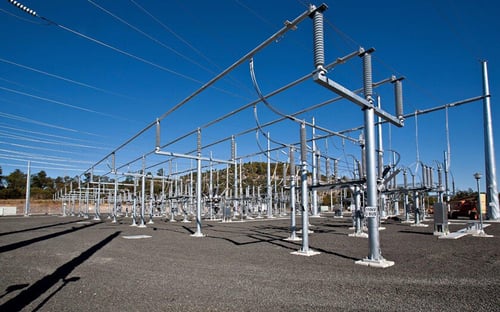
Energy & Infrastructure, Australia, Network Control, Substation Automation, Human Machine Interface (HMI) COPA-DATA energizes Powerlink Queensland’s HMI systems (Australia)
Read moreQueensland’s high-voltage electricity transmission network provider chose zenon to carry out a major upgrade to its HMI. COPA-DATA’s commitment to ‘parameterization instead of programming’ enabled a cost-effective and highly-functional solution without the need for an expensive recommissioning effort.
-
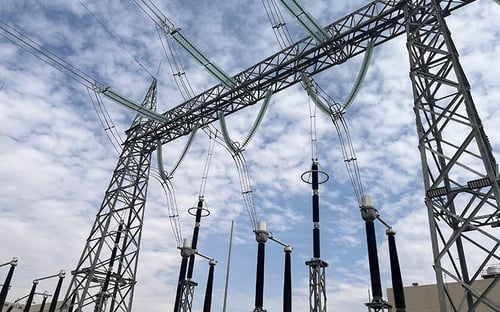
Energy & Infrastructure, Saudi Arabia, Network Control, Substation Automation Saudi Electricity Company: Lighting up Arabian Nights (Saudi Arabia)
Read moreWith the implementation of COPA-DATA's hardware-agnostic zenon software platform, SEC's Frusyah 110/13.8 kV substation was transformed with a state-of-the-art automation solution by System House Factory for Electric Panels Co. (SEP). Implemented within a few weeks, this innovative system ensures reliable operation and simplified maintenance for a seamless power supply.
Choose zenon for all your digital substation needs
Managing or entering the digital substation market can feel overwhelming. Luckily, zenon can simplify this process. zenon is designed for flexibility, meaning it is optimized for on-site and remote maintenance, whether you need to take a manual approach or focus on automation. For more information, contact COPA-DATA today!