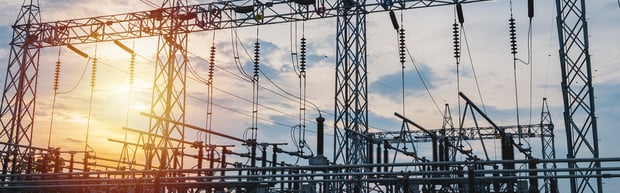
How do DNP3 and IEC 61850 work together in a modern substation?

Energy_DNP3_Detail_small_1420x757px
Home Industries Energy & Infrastructure Overview How DNP3 and IEC 61850 Work Together for Substation Modernization

DNP3 and IEC 61850 are both widely used in substation automation, often within the same utility. DNP3 (IEEE 1815) is a proven telecontrol protocol used for communication between field devices, RTUs, and control centers. IEC 61850 is the international standard for high-speed local communication between intelligent electronic devices (IEDs) within digital substations. As utilities modernize their substation networks from DNP3 to IEC 61850, a platform that supports both protocols natively, such as COPA-DATA's zenon, enables DNP3 IEC 61850 integration and allows the transition to happen incrementally, without replacing the entire automation system at once.

Key takeaways: DNP3 and IEC 61850 in a unified architecture

  • DNP3 and IEC 61850 serve overlapping but distinct purposes. DNP3 is a lightweight, event-driven protocol built for reliability over low-bandwidth or serial connections. IEC 61850 is a high-speed, data-model-driven standard designed for interoperability between IEDs from different manufacturers within the substation.

  • Modernization does not require replacing everything at once. A platform that supports both protocols lets utilities continue operating existing DNP3 devices while introducing IEC 61850 equipment as individual bays or substations are upgraded.

  • A single software platform eliminates the complexity of running separate automation systems for DNP3 and IEC 61850 environments, reducing engineering effort, training requirements, and operational risk.

  • zenon supports DNP3 master and outstation endpoints alongside native IEC 61850 MMS Client as well as Server and GOOSE for station and process bus integration, enabling a unified approach to substation automation across both protocol generations.

Where are DNP3 and IEC 61850 used in substation automation?

DNP3 (Distributed Network Protocol, also standardized as IEEE 1815) was designed for a specific challenge: reliable communication over unreliable connections. Serial links, radio networks, dial-up modems, and TCP/IP. DNP3 handles high latency, low bandwidth, and intermittent connectivity while maintaining data integrity through event-driven reporting and integrity polling. These characteristics made it the dominant protocol across North American utilities and in many other markets worldwide.

In practice, DNP3 is used at multiple levels. Within the substation, it connects protection relays, meters, and other IEDs to local RTUs or data concentrators. For upstream communication, it links substation gateways to control centers. The protocol is not limited to a single role, its flexibility has led to widespread adoption across both local and remote applications.

IEC 61850 addresses a different set of requirements: what happens between devices from different manufacturers inside a modern substation. As protection and control systems became more complex, the industry needed a standard that allowed IEDs to communicate at high speed, share a common data model, and be configured through a standardized engineering process. IEC 61850 provides this. It enables GOOSE messaging for protection coordination, Sampled Values for sharing digitized measurements, and MMS for SCADA monitoring and control, all within the substation local area network.

These two protocols coexist in utilities worldwide. Many organizations operate DNP3-based substations today and are adopting IEC 61850 for new builds and refurbishments. The modernization task is not about replacing DNP3 entirely but about managing a mixed DNP3 IEC 61850 environment over the lifecycle of the assets. 

  • Content_full_2560x800px_DNP3

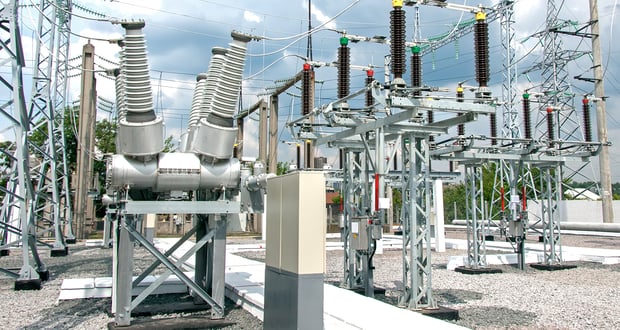
    The DNP3 standard was designed for remote communication in utilities, where dealing with low bandwidth or network interruptions is of major importance.

    What is the challenge when a utility migrates from DNP3 to IEC 61850?

    Many utilities have operated DNP3-based substation networks for decades. Their field devices, RTUs, engineering procedures, and control center interfaces are built around the DNP3 way of working.

    The challenge comes when these utilities begin adopting IEC 61850 for new or refurbished substations. IEC 61850 devices communicate using a fundamentally different model. The data is structured in logical nodes with predefined semantics rather than simple point lists. The configuration process uses SCL (Substation Configuration Language) files rather than manual point mapping. Communication services, such as GOOSE and MMS, behave differently from DNP3's master-outstation polling.

    The common assumption, and the concern that slows modernization, is that adopting IEC 61850 means replacing the entire automation system: new devices, new SCADA software, new engineering tools, new training. For a utility with dozens or hundreds of substations, this appears to be a high-cost, high-risk, multi-year program.

    This assumption is incorrect. A platform that supports both DNP3 and IEC 61850 allows the transition to happen incrementally, substation by substation, bay by bay, without disrupting existing operations or abandoning functioning DNP3 assets.

    How does a unified platform enable the transition?

    The solution is a substation automation platform that speaks both protocols natively, acting as the bridge between the DNP3-based installed base and new IEC 61850 deployments without requiring separate systems for each.

    In practice, a unified platform can:

    • Acquire data from both protocol environments simultaneously. DNP3 outstations and IEC 61850 IEDs coexist within the same project. The platform collects data from both, normalizes it, and presents it to operators through a consistent HMI regardless of the source protocol.

    • Serve as a protocol gateway. Data from IEC 61850 devices can be forwarded to a DNP3 control center. Commands from a DNP3 master can be routed to IEC 61850 devices. Upstream communication may also use other protocols, such as IEC 60870-5-101/104 or ICCP (IEC 60870-6/TASE.2), depending on the regional control center requirements. The platform handles the translation between all of these, so neither the substation devices nor the control center needs to be replaced to accommodate the other.

    • Allow incremental migration. A utility can continue operating existing DNP3 substations unchanged while deploying IEC 61850 in new bays or refurbished substations. Both are managed from the same engineering environment and the same operator interface. There is no cutover event, no flag day where everything must switch at once.

    • Preserve existing SCADA investment. The control center can continue to communicate via its existing protocol, whether that is DNP3, IEC 60870-5-101/104, or ICCP. The introduction of IEC 61850 at the substation level is transparent to the system operator. This protects the utility's investment in its control center infrastructure and operational procedures.

    • Content_full_2560x800px_DNP3_2
      With zenon, utilities can simply benefit from the strengths of both, DNP3 and IEC 61850 in one integrated solution.

      How does zenon support both DNP3 and IEC 61850?

      zenon Software Platform provides comprehensive support for both protocols within a single, integrated engineering and runtime environment.

      DNP3 support

      zenon functions as both a DNP3 master and outstation. As a master, it acquires data from subordinate DNP3 devices such as RTUs, protection relays, flow meters, and remote IEDs. As an outstation, it provides data to upstream control centers using DNP3, and can act as a gateway, forwarding data from IEC 61850 devices to a DNP3 master.

      Key DNP3 capabilities in zenon:

      • Master and outstation functionality compliant with IEEE 1815-2012, Subset Level 4 for both requests and responses

      • Secure Authentication v2 and v5 for protected communication with both IEEE 1815-2010 and IEEE 1815-2012 devices

      • TLS encryption per IEC 62351-3 for TCP/IP connections

      • Automatic master configuration from a Class 0 poll or XML device profile import, eliminating manual point mapping

      • File transfer support for retrieving disturbance records and other data from outstations

      • Dynamic polling that adapts to changing operational requirements, from small distribution substations to large transmission facilities

      IEC 61850 support

      zenon integrates IEC 61850 natively across all three core services: natively across all three core services:

      • MMS Client for acquiring data from IEC 61850 IEDs and issuing control commands

      • MMS Server for providing data to upstream systems

      • GOOSE Publisher and Subscriber for monitoring protection signals and substituting missing messages during device maintenance or failure

      zenon's IEC 61850 MMS Client is certified to Edition 2 of the standard by DNV GL and supports concurrent communication with Edition 1 and Edition 2 devices. This means utilities can integrate IEC 61850 equipment from different manufacturers and different standard editions within the same project, while continuing to operate existing DNP3 devices.

      Unified operation across both protocols

      The operational benefit is that operators interact with one consistent HMI regardless of whether the underlying data arrives via DNP3 or IEC 61850. Alarms, measurements, single-line diagrams, and control commands work the same way. Engineers configure both protocol drivers within the same engineering environment. There is one platform to maintain, one system to secure, and one set of operational procedures to document.

      For upstream communication, zenon supports the protocols required by different regional control centers, including DNP3, IEC 60870-5-101/104, and ICCP/TASE.2, alongside its native IEC 61850 capabilities.

      COPA-DATA is a member of the DNP Users Group and actively participates in the ongoing development of the IEEE 1815 standard. The zenon DNP3 drivers and protocol stacks are developed and maintained in-house, ensuring it evolves alongside both the DNP3 and IEC 61850 standards.

      What does this mean for modernization planning?

      • New substations can be deployed with IEC 61850 from day one while communicating to the existing control center through the platform's gateway function. The control center requires no modification.

      • Brownfield refurbishments can introduce IEC 61850 devices incrementally. Existing DNP3 devices remain operational. New IEC 61850 relays and merging units are integrated alongside them within the same HMI and SCADA environment.

      • The transition can be driven by asset lifecycle rather than a forced migration program. As DNP3 equipment reaches end of life, it is replaced with IEC 61850 equipment. The platform absorbs the protocol change without disrupting operations.

      • Training and procedural change happens gradually. Operators and engineers learn IEC 61850 concepts in the context of specific projects rather than through a large-scale system changeover.

      FAQs about DNP3 and IEC 61850

      • DNP3 is a lightweight, event-driven protocol designed for reliable communication over low-bandwidth or serial connections, used both within the substation and for upstream communication to control centers. IEC 61850 is a high-speed, data-model-driven standard designed for interoperability between IEDs from different manufacturers inside the substation. They address different requirements and are complementary in a modern substation architecture.

      • No. IEC 61850 and DNP3 serve different communication needs within a substation or utility control center. A platform that supports both protocols can forward IEC 61850 data to a DNP3 control center and route DNP3 commands to IEC 61850 devices, allowing both to coexist without replacing either system.

      • Cybersecurity in a mixed-protocol environment requires encryption (TLS per IEC 62351-3) for TCP/IP connections, secure authentication (DNP3 Secure Authentication v2/v5), role-based access control, and audit logging. zenon integrates these measures across both DNP3 and IEC 61850 to protect data integrity and system access.

      • Yes. zenon integrates IEC 61850 natively, including MMS Client, MMS Server, and GOOSE Publisher/Subscriber functionality. The zenon IEC 61850 MMS Client is certified to Edition 2 of the standard by DNV GL and supports concurrent communication with Edition 1 and Edition 2 devices from any manufacturer.

      • Yes. A substation automation platform that supports both protocols can acquire data from DNP3 and IEC 61850 devices simultaneously, normalize the data for operator displays, and act as a gateway between the two protocol environments. This allows utilities to operate existing DNP3 devices alongside new IEC 61850 equipment without running separate automation systems.

      • A DNP3 to IEC 61850 gateway is a function, often integrated into a SCADA/HMI platform, that translates data and commands between DNP3 and IEC 61850 protocols. It allows IEC 61850 IEDs to communicate with a DNP3 control center, and vice versa, without additional hardware.

      • Yes. zenon supports DNP3 as both a master and an outstation, compliant with IEEE 1815-2012 Subset Level 4. It includes Secure Authentication, TLS encryption, automatic master configuration, and file transfer capabilities. COPA-DATA is a member of the DNP Users Group.

      Contact us

      With more than 30 years in the industry, we continually improve our products to ensure they maintain all the logic and algorithms required to achieve the performance and functionality you need.

      Do you have any questions about zenon or how zenon can enable high availability at your facility? Find out more about our energy & infrastructure solutions.

      Contact_Image_890x485px_EnergyTeam
      Energy and Infrastructure Industry Management
      Contact us
      I'm COPA-DATA's AI Assistant and happy to help with general info. Got any questions?