
Press Release
Driving the future of energy: How automation ensures grid stability
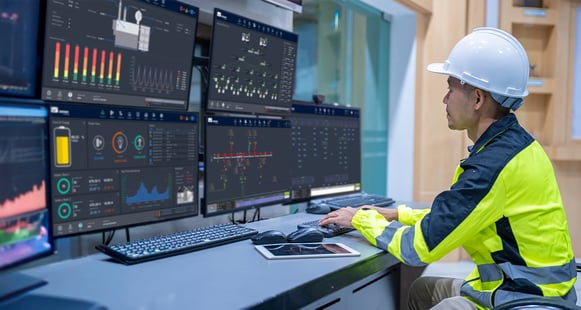
The energy world has been undergoing profound change for several years. Transmission and distribution system operators (TSOs and DSOs) are constantly facing new and complex challenges. To ensure the stability of power grids, there is no way around smart technologies.
Automation and digitalization are crucial, enabling efficient control and monitoring of the grid. To maintain grid stability during this dynamic phase of the energy transition, transmission and distribution operators should focus on three key automation success factors: scalability, security and seamless connectivity.
“To keep pace with the dynamic changes in the energy landscape, automation must go hand in hand with digitalization. Only when operators can rely on real-time data and intelligent systems will they be able to ensure the stability and resilience of tomorrow’s grids”, says Stefan Hufnagl, Industry Specialist Energy at COPA-DATA Headquarters.
One of the biggest challenges for transmission and distribution operators is keeping up with the ever-growing and constantly changing regulatory requirements, which demand significant time and resources. For grid operators, this means higher administrative and personnel costs. It also requires ongoing investment in new technologies and processes to implement regulations correctly and on time. In addition, renewable energy sources make energy supply more volatile, while energy demand continues to rise – driven by electrification and digital transformation. In this complex environment, grid operators must find new ways to maintain network stability and comply efficiently with regulatory requirements.
While conventional power plants can be integrated relatively easily into grid planning due to their stable generation capacities, renewable energies require more dynamic control. The increased expansion of decentralized generation plants and the growing integration of storage technologies make it necessary for grids to be able to respond efficiently and flexible to fluctuations in supply and demand.
Modern automation systems make it possible to monitor and optimize energy flows in real time. The growing number of decentralized generation plants, such as solar and wind farms, can also be flexibly integrated into the grid through intelligent control mechanisms. Thanks to openness and scalability , additional generation and storage capacities can be efficiently integrated into the existing grid without the need for extensive structural adjustments.
Another key issue for TSOs and DSOs is the security of grid systems. The ongoing digitalization and networking of power grids increases the risk of cyberattacks. To ensure that systems remain up to date and meet growing security requirements despite their long lifecycles, continuous software updates are essential. Manufacturer-independent systems based on open standards and interoperable interfaces offer significant advantages here. They enable the integration of technologies from different manufacturers and create a flexible, future-proof system. These systems enable seamless integration of existing and new technologies, supporting collaboration across disciplines.
Increasingly connected components in a diverse energy environment are essential for ensuring a reliable power supply. Especially in times of decentralized generation and high volatility, intelligent networking and the continuous integration of different energy sources and storage facilities are necessary. Automated platforms enable continuous communication and data processing between the various network components and ensure precise real-time control of the energy flow. Modern visualization technologies enable grid operators to clearly display and analyze all relevant data. This enables them to detect changes in grid load early and make informed decisions based on reliable data. In addition, secure remote access via various end-devices enables flexible and efficient maintenance. Employees can access important information regardless of their location and quickly assess whether on-site intervention is necessary. This ensures flexible personnel deployment in maintenance.
Increasing regulatory requirements, the consequences of the energy transition and growing demands for flexibility and security pose major challenges for transmission and distribution network operators. Automation, scalable systems and intelligent networking are concrete solutions for ensuring grid stability.
“The future of grid management lies in openness and scalability. By using flexible, manufacturer-independent platforms, TSOs and DSOs can continuously adapt to new technologies and regulatory requirements – without compromising on security or performance”, adds Stefan Hufnagl.
At the same time, the security of the grids must be guaranteed through continuous updates and the integration of advanced security mechanisms in order to ensure long-term operation even in the face of increasing threats and requirements.
With the zenon Energy Edition, COPA-DATA offers a solution that supports transmission and distribution system operators in designing their grids to be scalable, secure and efficient in order to meet the requirements of the modern energy world.
Driving the future of energy: How automation ensures grid stability
By using flexible, manufacturer-independent platforms, TSOs and DSOs can continuously adapt to new technologies and regulatory requirements.

Industry Specialist Energy at COPA-DATA Headquarters in Salzburg.
COPA-DATA is an independent software manufacturer that specializes in digitalization for the manufacturing industry and energy sector. Its zenon® software platform enables users worldwide to automate, manage, monitor, integrate and optimize machines, equipment, buildings and power grids. COPA-DATA combines decades of experience in automation with the potential of digital transformation and a strong drive for sustainability-enabling solutions. In this way, the company supports its customers to achieve their objectives more easily, faster and more efficiently.
The family-owned business was founded by Thomas Punzenberger in 1987 in Salzburg, Austria. In 2024, with more than 450 employees worldwide, it generated revenue of EUR 99 million. A sales network of international distributors and 14 subsidiaries ensures that the software is marketed worldwide. More than 350 certified partner companies further support end users with the efficient implementation of the software, particularly in the key industries of food & beverage, energy & infrastructure, automotive and pharmaceutical.