What is substation virtualization?
Substation virtualization is the practice of running substation automation software on shared computing infrastructure rather than on dedicated hardware. Functions that once required their own physical unit become software instances on a server, which separates the software lifecycle from the hardware lifecycle. This article explains what changes, where the constraints are, and how utilities adopt it gradually.
Key takeaways
-
Substation virtualization runs automation software on shared infrastructure instead of dedicated hardware, separating the software lifecycle from the hardware lifecycle.
-
It is an evolution of digital substation architecture, not a replacement for it. It depends on the communication foundation that IEC 61850 provides.
-
The main drivers are lifecycle economics, grid complexity from distributed energy resources, and the operational load of managing a growing substation fleet.
-
Real-time protection functions remain the most demanding case for virtualization, which is why adoption is happening gradually and at different layers.
-
Station-level virtualization is the practical starting point, since HMI, SCADA, and gateway functions do not carry the same real-time constraints as protection.
- zenon runs in virtual machines and containers and provides the station-level layer within a virtualized substation environment, alongside dedicated protection systems.
What is vPAC?
vPAC stands for virtual Protection, Automation and Control. It describes protection and control functions running as software rather than as dedicated relays, and it is the protection-focused side of substation virtualization. The broader category also includes concepts such as virtual IEDs, which run protection and control logic as software.
Virtualization and digitalization are related but distinct. A digital substation replaces copper signal wiring with Ethernet-based communication such as IEC 61850. Substation virtualization changes where the software runs.
Why are utilities moving toward substation virtualization?
Several pressures are pushing the industry to reconsider how substation automation is deployed and maintained.
Primary equipment in a substation lasts 30 to 40 years, while the secondary automation hardware typically lasts 12 to 15. Over the life of a single substation, that means several complete replacements of the automation system. Virtualization allows the software to outlive the hardware it runs on, which is the strongest argument for the model.
Distributed energy resources such as solar, wind, and battery storage are being connected at a scale the grid was not originally designed for. This places new demands on how substations are controlled and monitored.
Utilities are building and upgrading more substations while also maintaining a growing fleet of existing ones. Managing that workload with hardware-centric automation concepts becomes harder as the fleet expands.
What are the benefits of substation virtualization?
Virtualization changes the relationship between software and hardware, since several functions can run on shared infrastructure instead of each requiring its own device. The clearest consequence is that software and hardware refresh cycles become independent. A server can be replaced without re-engineering the application that runs on it. The software stays, and the infrastructure underneath it is renewed. This is the opposite of the traditional model, where replacing a device means replacing the function it performs.
Functions that previously required separate units now share infrastructure, which reduces the physical footprint of the automation system. This matters less in large transmission substations and more in distribution and industrial settings, where space and environmental control are often constrained.
Additional functions can be deployed as software instances rather than as new hardware devices. For utilities managing growth and change across a fleet, this makes it easier to adapt the automation system without a full hardware redesign.
Can protection functions be virtualized?
Protection functions can be virtualized, but it remains a specialized field. They operate within strict latency budgets measured in milliseconds, and running them as virtualized software component introduces additional layers between the application and the network which potentially lowers runtime determinism. Meeting those timing requirements in a vPAC substation environment is a genuine engineering challenge. Virtualized protection exists as a category, but adoption is happening gradually and at different layers.
Beyond the technical question, two further considerations shape adoption. With dedicated devices, the failure of one unit affects only a limited part of the system. Virtualized environments concentrate functions onto fewer components, which can appear less robust from a hardware-centric perspective, even when redundancy is designed to achieve comparable availability. Building confidence in the model takes time.
The skills gap is often the slowest constraint to resolve. Substation virtualization sits at the intersection of operational technology and information technology, and operating a virtualized substation requires capabilities that many utilities are still developing. It involves training and organizational change as much as technology.
For utilities that want to begin without taking on the protection layer, station-level virtualization is the lower-risk path. It addresses the HMI, SCADA, and gateway functions, which do not carry the same real-time constraints.
How does zenon support virtualized substations?
zenon runs in virtual machines and containers. This means the platform can be deployed on shared infrastructure within a virtualized substation environment, providing the station-level functions that operators and engineers rely on: HMI, SCADA, alarm management, event logging, gateway communication, and engineering tools.
zenon provides the station-level layer within a virtualized substation. Protection functions operate alongside it, either on dedicated devices or on specialized virtualized protection platforms. zenon is designed to integrate with both, so utilities can adopt virtualization at the station level while protection follows its own path.
What zenon does provide is the software layer that makes virtualized, digital, and conventional substations work together. Because zenon is vendor-independent and supports the protocols used across all three environments, including IEC 61850, DNP3, and IEC 60870-5-101/104, the same platform can operate across a mixed estate. As utilities move toward substation virtualization gradually, the station-level software layer remains consistent while the infrastructure underneath it changes.
How do utilities transition to virtualized substations?
Most utilities will operate conventional, digital, and virtualized substations at the same time for years. The transition is driven by asset lifecycle rather than by a single program, and it happens substation by substation as equipment reaches the end of its service life.
This is not unusual. The move from conventional to digital substations followed the same pattern, and many utilities still operate both. The practical question is not whether to virtualize everything at once, but where to start and how to keep a mixed estate manageable.
The answer, for most utilities, is station-level virtualization. Station-level virtualization means running the HMI, SCADA, and gateway functions in a virtualized environment while protection and control remain on dedicated devices. Because these functions do not carry the same real-time constraints as protection, the risk profile is lower and the benefits are available sooner.
The station-level software layer is a practical starting point. It does not carry the same real-time constraints as protection, so it can run in a virtualized substation environment with limited risk. Utilities can adopt virtualization at this layer while protection functions remain on dedicated devices and expand from there as the technology and their own capabilities mature.
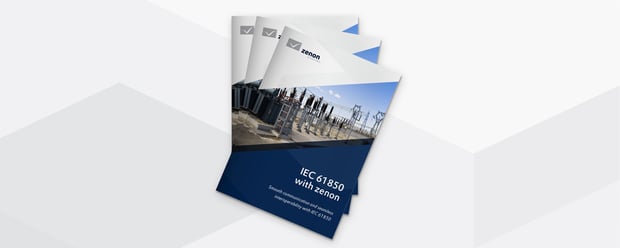
Discover the path to Substation Virtualization with our IEC 61850 eBook
Download our IEC 61850 eBook to learn more about substation modernization and how to achieve Digital Substations that enable virtualizaed substations.
FAQs about Substation Virtualization
-
Substation virtualization is the practice of running substation automation software on shared computing infrastructure instead of dedicated hardware devices. Functions that traditionally required their own physical unit become software instances running on servers.
-
A digital substation replaces copper signal wiring with Ethernet-based communication such as IEC 61850. A virtualized substation changes where functions run, moving both software and hardware-based functions such as protection relays onto shared infrastructure. The two are related, and virtualization often builds on a digital foundation.
-
Yes, but it remains a specialized field. Protection functions have strict real-time requirements measured in milliseconds, and meeting those requirements in a virtualized substation environment is a genuine engineering challenge. This is why adoption is happening gradually and at different layers.
-
vPAC covers protection, automation, and control functions running as software. Station-level virtualization covers the HMI, SCADA, and gateway layer. They address different parts of the substation and carry different real-time constraints, which is why they are often adopted at different stages.
-
Yes. zenon provides the station-level layer in a virtualized substation, running in virtual machines or containers. It integrates with dedicated protection systems or virtualized protection platforms, so utilities can adopt station-level virtualization independently of the protection layer.
-
No. zenon does not provide protection functions and does not virtualize them. It provides the station-level software layer and is vendor-independent, supporting conventional, digital, and virtualized substations.
-
vPAC stands for virtual Protection, Automation and Control. It describes protection and control functions running as software rather than as dedicated relays. It is the protection-focused side of substation virtualization.
-
The main driver is lifecycle economics. Virtualization allows software and hardware refresh cycles to become independent, which changes the cost of maintaining a substation over its 30 to 40 year life. Grid complexity and operational load are secondary drivers.
-
Station-level virtualization means running the station-level functions of a substation, such as HMI, SCADA, gateway communication, and engineering tools, in a virtualized environment. Protection and control functions remain on dedicated devices or on specialized virtualized protection platforms.
-
Most utilities start at the station level, because HMI, SCADA, and gateway functions do not carry the same real-time constraints as protection. This allows virtualization to be adopted with limited risk while protection follows its own path.
-
Yes. zenon runs in virtual machines and containers and provides station-level functions such as HMI, SCADA, alarm management, event logging, and gateway communication in virtualized substations.
-
Not immediately. Most utilities will operate conventional, digital, and virtualized substations at the same time for years. The transition is driven by asset lifecycle and happens gradually, substation by substation.
Future trends and development in IEC 61850 and zenon
While analyzing the role of IEC 61850 and zenon, it is important to keep future trends and developments in mind. Coping with increasing requirements, due to growing dynamics and demand for electrical energy, requires utilities to future-proof their assets and advance their operational effectiveness. As cybersecurity plays a bigger role in digitalized systems, the power industry must ensure protection against cyber threats. Additionally, the increased global emphasis on sustainability and zero-emission policies highlights the need to shut down traditional fossil energy sources in favor of distributed renewable ones. zenon is well positioned to tackle these challenges, with user interface development and smart grid solutions at the forefront of its development. We are excited to see what the future holds for our customers, IEC 61850, and zenon.
For more detailed information about the capabilities and implementation conformance of IEC 61850 related drivers and functions in zenon, please contact us.